
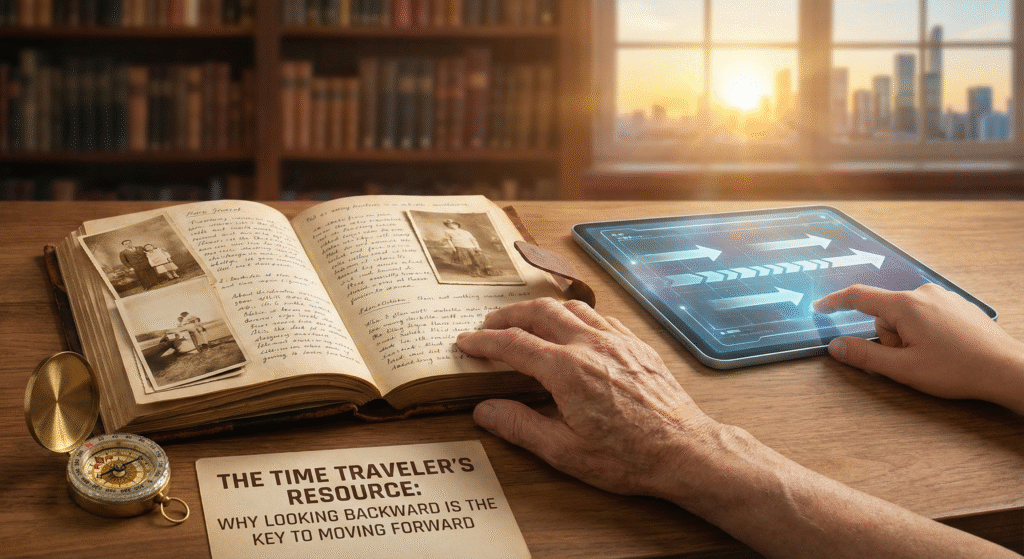
In a world that is relentlessly focused on the future—on the next deadline, the next technology, the next version of ourselves—there is a quiet, often misunderstood emotion that pulls us in the opposite direction: nostalgia. For decades, this bittersweet longing for the past was dismissed by scholars and society alike as a sentimental indulgence, or worse, a form of escapism that prevented us from engaging with the present. We were told to “live in the moment” and “let go of the past.”
However, emerging research from the American Psychological Association (APA) and leading social psychologists suggests that our understanding of nostalgia has been fundamentally flawed. Far from being a symptom of being stuck, nostalgia is now recognized as a potent psychological resource—a mental asset that can boost well-being, combat loneliness, and even fuel our motivation to pursue future goals.
Drawing on recent findings, including insights from the APA’s “Nostalgia Boosts Well-Being,” this guide explores the transformative power of nostalgia. We will delve into how revisiting our personal history can anchor us during turbulent times, the neurochemistry behind “the good old days,” and how you can intentionally harness this emotion to build a more resilient, meaningful future.
The Rehabilitation of an Emotion
To understand the power of nostalgia, we must first understand its history. The term itself was coined in the late 17th century by a Swiss physician to describe the profound homesickness experienced by Swiss mercenaries fighting abroad. For a long time, it was pathologized—treated almost like a neurological disorder or a form of depression. The prevailing wisdom was that dwelling on what was prevented people from adapting to what is.
Today, the script has been flipped. Research highlighted by the APA reveals that nostalgia is not a disease of the mind, but a defense mechanism of the self. It is a natural, restorative response to the anxieties of modern life. When we feel untethered, lonely, or stressed, our minds instinctively reach back to a time when we felt safe, loved, and connected.
This isn’t a glitch; it’s a feature. When we revisit happy memories, we aren’t just “daydreaming.” We are accessing a reservoir of positive emotions that can stabilize us. As the APA notes, this process releases dopamine, the brain’s “feel-good” neurotransmitter. This chemical release provides a natural high that can lower stress levels and reduce anxiety. In this light, nostalgia is less like a crutch and more like a psychological vitamin—something we can take to bolster our emotional immune system.
The Antidote to the Loneliness Epidemic
One of the most critical functions of nostalgia in the modern era is its ability to combat loneliness. We live in a time of paradox: we are more digitally connected than ever, yet rates of reported loneliness are skyrocketing. According to a 2023 Meta-Gallup survey referenced by the APA, nearly one in four adults worldwide reports feeling very or fairly lonely.
Loneliness is dangerous not just because it feels bad, but because it erodes our sense of worth. It tricks us into believing we are isolated and invisible. This is where nostalgia intervenes.
Most nostalgic memories are social. We rarely get nostalgic about sitting alone in a room filing taxes. We get nostalgic about family dinners, road trips with friends, holiday gatherings, or team victories. When we pull up these memories, we are reminding ourselves of our social bonds. We are reaffirming that we belong, that we have been loved, and that we have been a part of something larger than ourselves.
Research by Andrew Abeyta, PhD, a psychology professor at Rutgers University, found that encouraging lonely individuals to take a “trip down memory lane” helped restore a sense of meaning in their lives. But the effect went further than just comfort. The study found that after engaging in nostalgic reflection, people felt a surge of social confidence.
This is a crucial distinction. Nostalgia didn’t just make them feel better about being alone; it gave them the strength to stop being alone. By remembering that they were socially successful in the past, they felt more capable of connecting in the present. It acted as a social battery charger, providing the energy needed to reach out to a friend or join a new group.
An Existential Anchor in Uncertain Times
Beyond social connection, nostalgia serves a deep existential function. Life is often unpredictable and chaotic. We face job losses, health crises, and the inevitable passage of time. These uncertainties can induce a form of existential dread—a fear that life lacks meaning or continuity.
Nostalgia acts as an anchor in this storm. It provides a sense of self-continuity. It connects the “you” of ten years ago to the “you” of today, creating a coherent narrative of your life. It reassures you that despite all the changes, the core of who you are remains intact.
The Human Flourishing Lab at the Archbridge Institute found that 84% of American adults agree that nostalgic memories serve as reminders of what is most important in their lives. When the present is confusing, the past offers clarity. It reminds us of our values, our triumphs, and the relationships that matter most.
Nearly 60% of people believe nostalgic memories offer guidance when they are unsure of what direction to take. This challenges the stereotype that nostalgia is passive. In reality, it is often a consultation with our past selves to make better decisions for our future selves. When we are at a crossroads, looking back at times when we were happy or proud can illuminate the path we should take next.
The Paradox: Looking Back to Move Forward
Perhaps the most surprising finding in recent psychological research is that nostalgia is a motivator. We tend to think of it as a retreat—a way to hide from the future. But Clay Routledge, PhD, a leading expert on the psychology of nostalgia, argues the opposite. He states, “Nostalgia actually helps people move forward.”
How does looking back help us move forward?
- Optimism: By remembering past successes and happy times, we boost our confidence that good things can happen again. It counters the negativity bias that often clouds our view of the future.
- Inspiration: Nostalgic memories often involve times of growth or overcoming obstacles. Replaying these “greatest hits” can energize us to tackle current challenges.
- Self-Esteem: Remembering that we were valued and competent in the past buffers our self-esteem against current failures.
Routledge’s research indicates that nostalgia increases positive mood and meaning in life, which in turn energizes people. It transforms the past from a place of residence into a launchpad.
Nostalgia Across the Lifespan
While nostalgia is beneficial for everyone, it holds particular power as we age. The APA highlights that age is positively associated with well-being, but only for those who regularly engage in nostalgia. This suggests that for older adults, the ability to look back fondly is a key component of healthy aging.
As we age, our future time horizon shrinks. We may face physical limitations or the loss of loved ones. In this context, nostalgia becomes a vital tool for maintaining hope. Krystine Batcho, PhD, a professor at LeMoyne College, notes that nostalgia can preserve hope even amidst grief.
When we lose a loved one, the finality of death can lead to despair. Nostalgia allows us to keep the relationship alive internally. Reminiscing with photos or mementos can counteract feelings of hopelessness by focusing on the enduring impact the person had on our lives. It reminds us that the love and experiences we shared are permanent fixtures of our history, things that can never be taken away.
The Pitfalls: Bittersweet vs. Toxic Obsession
Of course, like any potent psychological tool, nostalgia must be used correctly. It is not without its risks. The holidays, for example, are a prime trigger for nostalgia, but for many, they are a source of stress and sadness. The APA notes that 43% of adults say holiday stress interferes with enjoyment, and many have negative associations with the past.
“The past isn’t always a warm and cozy place,” notes Dr. Abeyta. For those with trauma or difficult family histories, looking back can be painful.
Furthermore, there is a difference between restorative nostalgia and obsessive nostalgia.
- Restorative Nostalgia is what we have been discussing: revisiting the past to find meaning, comfort, and motivation to engage with the present.
- Obsessive (or Escapist) Nostalgia occurs when we idealize the past to the point where the present becomes unbearable by comparison. If we constantly say, “Things were better back then,” and refuse to accept the changes of the modern world, nostalgia becomes a trap. It leads to depression and disengagement.
The key is to visit the past, not live there. We must ensure that our reflection does not curdle into resentment for the present.
A User’s Guide: How to Harness Nostalgia
So, how do we use this “time traveler’s resource” effectively? The psychologists featured in the APA article offer three primary strategies for harnessing the power of nostalgia while avoiding its pitfalls.
1. Focus on the Positives (Gratitude Over Grief)
The lens through which we view the past matters. It is easy to look back and feel a sense of loss—mourning the youth we no longer have or the friends we haven’t seen. To flip this dynamic, we must approach nostalgia with gratitude.
Instead of thinking, “I miss those days,” try thinking, “I am so lucky I got to experience those days.” This shift in perspective is subtle but profound. It turns the memory from a reminder of lack into a reminder of abundance.
Practical Tip: Create a “Gratitude Bank.” When you feel down, don’t just randomly scroll through old photos. specifically look for images that represent moments you are grateful for. Acknowledging the good fortune of your past builds resilience for your present struggles.
2. Reminisce, But Don’t Obsess (Update Your Traditions)
If we cling too tightly to the specific details of the past, we set ourselves up for disappointment. Life changes. People move, dietary restrictions develop, and family dynamics shift.
Dr. Routledge shares a personal example in the APA article regarding cinnamon rolls. His mother always made them a specific way. However, his wife has a dairy allergy. Rather than abandoning the tradition (or lamenting that it’s “not the same”), he adapted it. They now make the rolls with vegan butter.
This is the secret to healthy nostalgia: Adaptation. Use the past as a template, not a rigid script. Identify the feeling or the value behind a tradition (e.g., togetherness, celebration, generosity) and find a way to express that value in your current reality.
Practical Tip: Identify a holiday or family tradition that has become difficult or stressful to maintain in its original form. Ask yourself: “What is the core emotion I want to get from this?” Then, brainstorm a new way to achieve that emotion that fits your life today.
3. Make it Social (Active vs. Passive)
Nostalgia is most powerful when it is shared. Passive nostalgia—scrolling through an ex’s Instagram or listening to sad music alone in the dark—can sometimes lead to rumination. Active nostalgia involves bringing others into the memory.
Dr. Routledge emphasizes that social activities amplify the mental health boost of nostalgia. When we share stories, we aren’t just remembering; we are performing. We are strengthening the bonds we have with the people around us right now.
Practical Tip:
- The Storytelling Dinner: Host a dinner where the “price of admission” is bringing an old photo and telling the story behind it.
- The Musical Time Machine: Create a collaborative playlist with friends or family where everyone adds songs from a specific era of your lives, then listen to it together.
- The “Remember When” Call: If you are feeling lonely, call an old friend with the specific intent of discussing a shared positive memory. “I was just thinking about that road trip we took in 2015…” is a great conversation starter that bypasses small talk and goes straight to connection.
Conclusion: The Library of Your Life
We often treat our memories like a storage unit—a dusty place filled with boxes we rarely open, or perhaps a place we go to hide when the world gets too loud. But the research is clear: our memories are more like a library or a laboratory. They are a place of learning, resource gathering, and inspiration.
Nostalgia, when practiced with intention and gratitude, is a profound booster of well-being. It reminds us that we are part of a narrative that existed before this morning’s stress and will continue long after this week’s deadline. It connects us to our authentic selves and to the people who have shaped us.
As we navigate the complexities of the modern world, let us not be afraid to look back. The “good old days” are not just a refuge; they are the fuel we need to build a “good new day.” By honoring our past, adapting our traditions, and sharing our stories, we can turn nostalgia into one of our greatest allies in the pursuit of a happy, meaningful life.